Procurement brief
A First-Aid Kit Access Plan for Home, Car, and Work
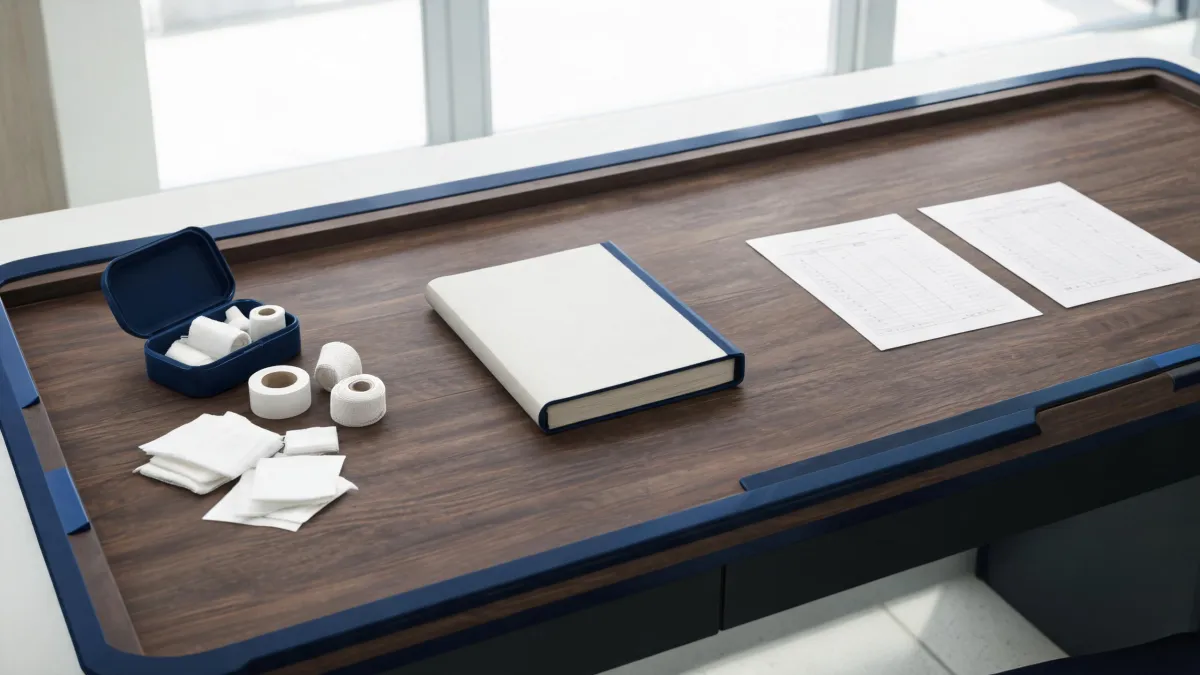
Where should a first-aid kit actually live when your week is split between a house, a car, and a workplace? Two fixed spots and one piece of knowledge: a kit in the home, a kit in the car, and the location of the kit where you work. That is the layout the American Red Cross sets out for households, and it is a placement instruction rather than a contents list. It says nothing about how many bandages or which gauze size to buy.
Which is where most buying decisions go sideways. Shoppers compare kit sizes, compartment counts, and case materials, pick a winner, put it in a closet, and consider the problem solved. Reachability is the criterion that decides whether a kit does anything at all: a larger kit at home does not shorten the distance between you and a kit when you are across town at a job site. The useful question is not which kit, but how many places you can actually reach one from, and how reliably.
Where Should a First-Aid Kit Live?
Three placements appear in the Red Cross first-aid kit guidance, and each one is phrased as an instruction to the person doing the buying: keep a first aid kit in your home and in your car, carry one with you or know where you can find one, and find out the location of first aid kits where you work. Read as a set, they define three access points — the house, the vehicle, the workplace — rather than three storage spots for a single kit.
An access point, as the term is used here, is a place you can reach without searching: you know it exists, you know where it is, and nothing between you and it requires a decision. That last clause does the work. A kit at the back of a garage shelf behind two boxes of holiday decorations is stored but not accessible. A kit in a kitchen drawer that everyone in the household has opened is accessible, even if it holds less.
Notice what these instructions do not contain: no contents list, no minimum count of anything, no case dimensions, no storage temperature. The scope is placement and access. That shape is useful at the point of purchase, because it lets you settle the layout question before you compare kits, and settling it first usually changes which kit you end up needing to buy.
Home Access Needs a Fixed, Known Spot
A kit that lives in whichever drawer was closest the last time someone needed a dressing is not an access point; it is inventory in motion. Go with one fixed home base and a second, smaller kit for the room where you actually spend your waking hours. Skip the habit of walking the household kit from room to room. The trade-off is a little duplication against the minutes you lose opening drawers while someone is bleeding.
Placement solves half the problem; the other half is who knows about it. The person who buys the kit is often not the person who will need it — a teenager home alone, a visiting parent, a houseguest. A home base that exactly one person can locate is one forgotten errand away from being an unmarked box on a shelf. Naming the spot out loud to everyone who lives there costs nothing and converts a private habit into a household fact.
What home placement does not settle is contents and shelf life. Nothing in the guidance quoted above tells you which items belong in the kit or how long they stay usable; those are questions for the specific product's own labeling. Keep the two decisions separate and the home section stays a question of real estate: one spot, known to everyone, not repurposed as general storage.
Carry a Kit or Know Its Car Location
The car instruction offers a genuine either/or: carry a first aid kit with you, or know where you can find one. Those are different access strategies with different failure modes. Carrying puts the kit in your control and makes it available when you are away from the vehicle. Knowing a location shifts the burden onto memory, and onto whoever stocks that location.
If you routinely clear the car — tools, sports gear, and shopping out at the end of every trip — go with a dedicated car kit that stays in the vehicle, because a kit that has to be loaded is a kit that gets left on the kitchen counter. If you only occasionally carry supplies and the vehicle mostly sits in a driveway, knowing a fixed location is cheaper and more honest about how you actually behave. The trade-off is duplication cost against reliance on memory, and memory is the weaker of the two.
The vehicle is also the placement where buyers most often assume specifications they were never given. Interior temperatures in a parked vehicle move well outside household ranges, and the guidance here says nothing about heat tolerance. Treat durability claims as a question for the individual product's own documentation, and treat a kit whose heat exposure you have never checked as unknown rather than fine.
A location you cannot describe — the cabinet, the shelf, the door between you and the kit — without pausing to think is not a location you know yet; it is a rumor about one.
Workplace Access Starts With a Known Location
The workplace instruction is the shortest of the three and the easiest to skip: find out the location of first aid kits where you work. The verb is find out, which tells you the kit is almost certainly not yours. Someone else selected it, someone else stocks it, and someone else decides whether the cabinet stays unlocked on a Sunday.
If you work at a single site, find the kit and note the route to it the way you would note a fire exit. If you split time across two or three sites, check each one instead of assuming an arrangement carries over — a hospital corridor, a retail floor, and a construction trailer have nothing in common except the word kit. The trade-off is a few minutes of asking against confidence you would otherwise be borrowing from a building you never checked.
Locked doors open a gap between a location you can name and a location you can reach. If the site kit sits behind badge-controlled doors or in a supervisor's office, the location you need is the one you can open during the hours you actually work, including the shift nobody senior is on. That is a question for a supervisor or site safety contact, and it gets answered clearly or it does not get answered at all — either outcome tells you something about the site.
Match Kit Placement to Your Daily Route
Coverage follows movement, not ownership. The three access points do not carry equal weight; weight them by hours and by predictability. A place you occupy forty hours a week on a fixed schedule is easier to plan around than a place you pass through unpredictably, and the unpredictable one is where a duplicate earns its keep.
Run the decision in order. First, fix the residence, because it is the base every route returns to and the place where other people also need access. Second, handle the vehicle: either a dedicated kit or a location you can state without hesitating. Third, confirm the workplace location, which usually costs one email and closes the largest single gap for a full-time worker. Jumping to the car or the office while the home spot stays unfixed inverts the priority, since a kit nobody can find at home performs exactly like no kit at the moment it matters most.
Suppose a field technician drives between client sites three days a week and reports to a depot the other two. The house is fixed and known. The vehicle absorbs the unpredictable hours, so it gets a dedicated kit rather than a remembered location. The depot is visited on a schedule, so confirming the site kit once and noting the cabinet is enough, and duplicating there would buy coverage the technician already has. That allocation costs one extra kit and one conversation.
The framework does not tell you how large any kit should be. Size is a contents question, and placement is settled before it: how many distinct places can you reach a kit from, and how consistently can you reach them.
What One Kit Cannot Cover Across Three Places
One kit occupies one place. That is a physical constraint rather than a purchasing preference, and it is the constraint household buyers quietly ignore when they buy a single large kit and treat the purchase as finished. A kit fixed at home is absent from the car; a kit left in the car is absent from the house at the moment someone is scalded at the stove.
If only one kit can be fixed in place, I would fix it at home and stop letting it travel with the car. The reasoning is exposure rather than sentiment: the residence is where the most people in a household spend the most hours, including anyone who cannot drive themselves to a store, and a home kit serves every route that begins and ends there. The condition attached to that preference is real, though — if your waking hours are overwhelmingly spent in a vehicle and the house is mainly where you sleep, reverse it and make the car the fixed point. The trade-off is identical either direction: depth of supplies in one place against access in the second.
Skip the idea that a bigger kit answers a second location. The choice is usually between deepening the home kit and adding a thinner second kit in the car; the second kit closes a gap the upgrade cannot touch, and closing a gap beats deepening a place you already had covered.
So back to the question that opened this: where should the kit live when the week is split across a house, a car, and a workplace? A fixed home kit that everyone in the household can find without searching, a car arrangement you chose deliberately — carried or located — and a workplace location you confirmed instead of assumed. If only one of those three gaps can be closed this month, close the one your daily route makes least avoidable, and leave the rest written down where the next person can act on it.

Jane Smith
I’m Jane Smith, a senior content writer with over 15 years of experience in the packaging and printing industry. I specialize in writing about the latest trends, technologies, and best practices in packaging design, sustainability, and printing techniques. My goal is to help businesses understand complex printing processes and design solutions that enhance both product packaging and brand visibility.
Leave a reply