Procurement brief
Replace Expired First Aid Kit Supplies Without Rebuying the Whole Kit
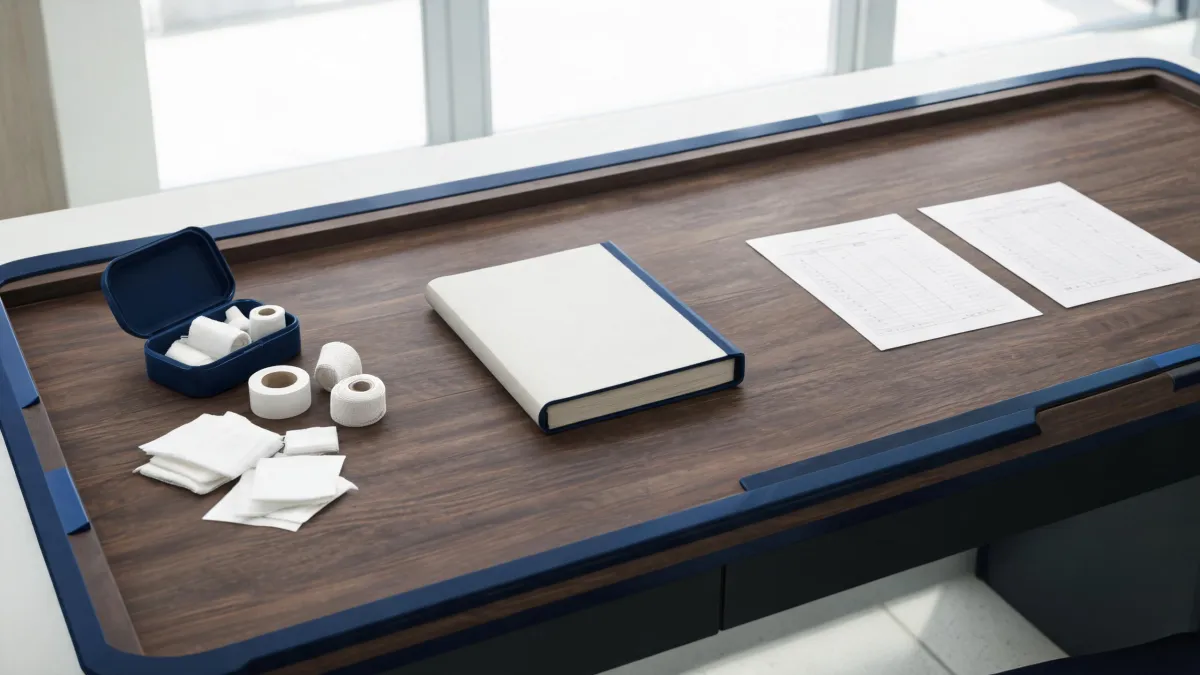
Suppose the kit comes off the shelf after a kitchen cut and the contents do not hold up. The gauze packet is already torn open, the tape roll is gone, and a tube in the side pocket carries a date that passed two winters ago. The bill for that moment is not the price of a new kit. It is the paper towel pressed against the cut, the trip to a drugstore, and the small permanent downgrade in how much anyone in the house trusts the bag hanging by the door.
The replacement unit is the individual supply. Not the kit, not the case, not the printed date on the box, but the single item, judged by whether its absence or its expiry blocks a task the kit exists to do. Once a household accepts that, most of the buying question answers itself, and the reflex of throwing the whole thing out and starting over starts to look like what it is: an expensive way to avoid an inventory.
Why a Kit Date Is Not a Replacement Plan
A first aid kit is an assembly, not a product with one clock. Dressings, bandages, tape, gloves, a cold pack, a cream, each has its own shelf life and its own use state, and none of them age at the rate of the fabric case holding them. Because those schedules differ, a single printed date cannot honestly represent all of them. What the date usually marks is either the earliest-expiring component inside or the lot the kit was packed from, which means it tells you where to start looking, not what to discard.
The instruction that actually governs this is narrower than the habit it gets turned into: check expiration dates and replace any used or out-of-date contents. Read that literally and the unit of replacement is the content. An opened gauze pad is spent whether or not its date has passed. A sealed one past its date is out. A bandage that has lost its tack after a summer in a hot car is finished even if the printing says otherwise.
Why does the container survive all this? It comes down to materials. The case is a nylon or plastic shell doing a mechanical job: holding shape, keeping contents dry, staying findable on a shelf. Its failure modes are mechanical. The consumables fail chemically instead. Adhesive dries, a sealed pouch loses the integrity that made it worth sealing, a cream separates. Two different failure clocks sit inside one object, and no single date can run both of them.
Order Checks by What a Missing Item Blocks
Empty the kit onto a table and three kinds of problem show up at once: things used and not replaced, things past their date, and things that were never there. Rank them by what they block. First come the items without which a basic kit task cannot be finished, which in most kits means wound covering, dressings, and the tape or bandage that holds them in place. Then the high-use items that get consumed steadily. Comfort and personal extras come last.
The reason for that order is functional, not statistical. A kit earns its place by completing the task in front of it, and a kit missing tape cannot secure a dressing no matter how many antiseptic wipes survived the purge. Frequency alone would rank the wipes higher because they disappear faster, and that ranking would be wrong at the exact moment the kit matters. How often an item is used and how badly its absence hurts are different measures, and only the second one belongs at the top of the list.
Access belongs in the same framework, one step earlier. Carry a first aid kit with you or know where you can find one, which puts location ahead of contents in any honest review. A kit nobody can locate fails before a single item inside it is tested. In a home that means the check has two halves: is the kit where the household expects it, and does what is inside let it finish a task. A kit buried in a garage cabinet has an access problem no refill will solve.
Then run the replacement check on what is actually there, looking at date and use state together. Used and out-of-date contents both move to the shopping list, but they are not the same kind of problem. A used item is a known gap and easy to buy back, because someone remembers taking it. An expired item is silent, since nothing about a sealed packet announces that its contents are past their window, which is why the date pass has to be deliberate rather than incidental.
Candidate Replacement Sets for Home and Activity Kits
Three replacement shapes cover most households, and none of them is a specific product recommendation. Treat them as configurations to build or buy against the check you just ran.
The first is a refill set for the case already on the shelf: a loose collection of the blocking and high-use items, sized to the space the old contents occupied. It avoids paying for a second case, and it keeps the kit recognizable, so anyone in the house can open it and see the same arrangement they saw last time.
The second is a small activity kit that lives in a car or a daypack and duplicates only the blocking items. Because a kit that travels meets different constraints than one that stays put, including size, weight, heat exposure, and how often anyone thinks to check it, copying a home contents list into a daypack produces a heavy kit that is depleted for tape and never restocked.
The third is a personal add-on pouch that rides inside whichever kit is in play and holds the person-specific material: medications, emergency phone numbers, and anything a health-care provider has suggested. Keeping that pouch separate has a mechanical payoff. It moves between the home kit and the car kit without a full repack, and it can be reviewed on its own schedule instead of dragging the whole inventory into a medication question.
Suppose a household of two adults, one child, and a car that does weekend hikes. The home kit carries the wide inventory and can afford to be slow to check. The daypack kit carries the blocking items only, so carrying it is never a decision. The pouch travels between them. That split is not a marketing bundle, it is the same replacement framework applied to three different access conditions.
Keep the Case, Replace the Consumables
Keep the case and replace what is inside it, item by item. The bag did not expire. The contents did.
Automatic whole-kit replacement is the wrong default when only some contents are used or past their date. The shopping list points at contents, not at the purchase. A sound shell with a working zipper and half its supplies intact is a refill job.
Replace the case itself only when the container fails its mechanical job or when the inventory cannot be made usable. A split zipper, a cracked lid, or a strap that let go is a container problem. A package date is not.
Fair enough, there is a case where resetting beats auditing. A kit inherited from a previous apartment, or one depleted by kids and repacked with whatever was nearby, has an inventory nobody can vouch for. Rebuilding it from a known list is faster than a detailed audit. That is replacement because the contents are unknown, not replacement on a date. The distinction is what keeps the recommendation honest.
Personal Items Change the Checklist
Personal items sit outside the generic list by definition: medications, emergency phone numbers, and other items a health-care provider may suggest. Because those are defined by the household member rather than the kit category, no standard contents list can decide them and no refill set can supply them. They have to be named by someone who knows the person.
The reason to keep them separate is not tidiness. A generic kit's value is being the same for everyone, which is what makes it predictable under stress and checkable by anyone in the house. Personal items are the opposite: specific, changing, tied to one person. Mixed into the general inventory, they force every household review to reason about medication and contacts before deciding whether the kit is complete, and that review is the one most likely to get skipped.
Three procurement questions handle this section without drifting into medical advice. Whose medications belong in the kit. Which phone numbers go on the card and when they were last right. What a health-care provider has already suggested for this household. Answer them once, record the answers, and the pouch becomes a thing anyone can verify rather than a thing only one person understands.
A Refill Routine Without a Single Date
One annual review date sounds disciplined and misses both failure modes. Use and expiry are separate events. An item gets consumed in March and nobody notices until the next check. A sealed item quietly passes its date in September. A single calendar date catches neither reliably, because the kit's condition is set by what happened to it, not by the season.
Four triggers do the work. After the kit is used, even for something trivial, restock what came out. Before a specific activity, check the travel kit that goes with it. When an item's date passes, pull it and add it to the list. And when the household changes, whether that is a new prescription, a new address, or a new driver, revisit the personal pouch. Each trigger produces the same output: a named item on a list.
The routine is a purchasing and inventory habit, not a procedure. It carries no fixed interval, because the right interval is whatever the household's actual use pattern produces, and a kit opened twice a year needs two restocks rather than twelve inspections. What makes it stick is the list living in one place, so a replacement bought in March and a replacement bought in October end up on the same sheet instead of on two sticky notes.
Know where the kit is and keep it where it is used. That single habit does more for readiness than a longer contents list, since a refilled kit in the wrong cupboard is still a kit nobody reaches for.
The tradeoff is plain. Item-level replacement costs an inventory habit and a series of small decisions. A single buy-a-new-kit date costs less thought and replaces serviceable gear along with the spent items. Leave the case in service, refill on triggers, and review the personal pouch on its own. That is more work than one date, and it is the version that keeps the kit matched to the household using it.

Jane Smith
I’m Jane Smith, a senior content writer with over 15 years of experience in the packaging and printing industry. I specialize in writing about the latest trends, technologies, and best practices in packaging design, sustainability, and printing techniques. My goal is to help businesses understand complex printing processes and design solutions that enhance both product packaging and brand visibility.
Leave a reply